Sunday, September 4, 2016

My 5 Favorite Coins

I attended a meeting of ancient coin collectors last week. It was interesting seeing what others collect and some of the stories that went with the coins. For example:

  • The obverse and reverse of this coin shows the silphium plant and seed. The plant was known for its medicinal properties, including contraception. (1). The reverse shows something much like modern day valentine heart. 
  • I won this coin by bidding from a helicopter flying over Brazil.
  • This silver sixpence was worn in my grandmother's shoe on her wedding day.
My favorite five:
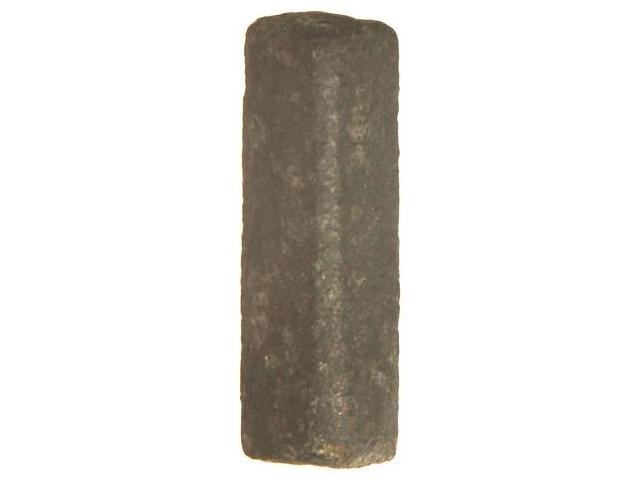
The large piece is a Ramo Secco bar


Julia Domna (Augusta, 193-217).

Moesia Inferior, Marcianopolis.
Æ Triassarion
Obv - Draped bust r. R

 (23mm, 8.78g, 7h). / The Three Graces standing—the outer two facing, with heads turned inward, the middle with back facing and with arm around other two. H&J, Marcianopolis 6.17.26.9; cf. Varbanov 887. Good Fine
The coin above is my most recent purchase. The one in the group of five is an older coin from the Mark Stahl collection offered by CNG several years ago.


Roman Republic Silver Denarius, Rome, 42 BC
C. Vibius Varo
Obv - Helmeted bust of Minerva r., wearing aegis
Rev - Hercules standing facing, holding club in r. hand and lion-skin over l. arm; on r. C. VIBIVS; on l. VARVS.
Cr – 494/38
BMCRR – 4303
Syd – 1140
Bab – Vibia 26
Coin from John Quincy Adams collection.


C. Caecilius Metellus Caprarius. AR Denarius, 125 BC.

Obv. Head of Roma right, wearing Phrygian helmet; below chin, X and behind, ROMA.
Rev. Jupiter, crowned by Victory flying right, in biga of elephants left, holding thunderbolt in left hand and reins in right; in exergue: C. METELLVS.
Cr. 269/1.
B. 14.
4.01 grams, 18.0 mm
R. Insignificant hairline flan cracks, otherwise good EF. Perfectly centred and struck on excellent metal, from fresh exceptional dies, work of a skilled master-engraver. A masterpiece in miniature, lustrous and lightly toned.

M. Volteius M.f. AR Denarius 78 BC.

Silver denarius; 3.77 grams; 19.50 mm; Well struck on a broad flan. Brilliant, superb and lightly toned. EF.
Obv. Head of Bacchus (or Liber) right, wearing ivy-wreath, and long hair in locks.
Rev. Ceres in biga of snakes right, holding torch in each hand; behind, plumb-bob. In exergue, M. VOLTEI. M.F.

Cr. 385/3.
Grueber 3160
RSC/Bab – Volteia 3
Syd – 776


1 - https://en.wikipedia.org/wiki/Silphium

Sunday, August 7, 2016

Anonymous Semilibral Quartuncis, Struck Rome, 217 to 215 BC, Cr 38/8

Anonymous Semilibral Quartuncis, Struck

Rome, 217 to 215 BC, Cr 38/8

Roman Republican AE, Anonymous, Semilibral, Quartuncis, Struck
Rome 217 to 215 BC
Obv – helmeted head of Roma, R, wearing an Attic helmet with peaked visor, wearing ear ring of one drop
Rev – Prow right, above ROMA, note the structure above deck on this boat is at about a 30 degree angle. At first I thought it might be double struck, but that is the design. I guess the Romans wanted rain to flow off the front of the pilot house.
3.24 grams; 15.4 X 16.1X 0.24 mm; 9h
Crawford – 38/8, this group is based on an As of 128 grams. 128 / 48 = 2.67
BMCRR – Rome 169, Grueber notes that D’Ailly of the British Museum was the first to recognize this denomination. Babelon and Mommsen did not have this denomination. BMCRR lists 16 examples with a weight range of 1.88 to 4.28 grams, Avg Wt = 3.01 g, St Dev = 0.71; Avg Dia = 16.0.
Sydenham – 88 or 110, Syd calls the obverse Bellona, the Roman War Goddess, and gives a weight range of 4.3 to 2 grams for #88 and 4.3 to 1.9 grams for #110. Syd says the only difference in 88 & 110 is weight.
Sear – 624, Sear comments the QU is the smallest RR denomination and was issued only briefly during the Semilibral period, 217 to 215 BC. With declines in RR bronze coin weights, the denomination ceased, never to be resumed.
Albert die Munzen der Romischen Republik – #110, This book arrived this week. I will have to use Google translate until I learn more German!
·         Obv - Romakopf mit attischem Helm; in German
·         Obv - Roma head with Attic helmet; translated to English
·         Rev – Prow right, in ex ROMA 
RBW – 110

This coin is one of 8 I bought at a coin show yesterday that were in old envelopes. Ex. an old hoard from off the Italian Coast; Elsen 37, 12/17/94, #227. Seven of the eight were RR bronze coins and one Spanish AE Semis.

I found over 100 examples of this coin on line, but stopped entering data at 62:

Weight 3.24
Weight - max 4.28
Weight - min 1.88
Weight - avg 2.95
Weight - st dev 0.53
Number 62
Diameter - max 16.1 2.4 mm thick
Diameter - min 15.4
Diameter - max  17.78
Diameter - min 14.00
Diameter - avg 15.57
Diam - st dev 0.82

It is interesting that the 3 major catalogers identify the obverse differently: 
Grueber - Roma in Athenian helmet
Sydenham - Bellona, Roman war goddess
Crawford - Roma in Attic helmet
Sear - Roma in crested Attic helmet

I found another Cr 38/8 with similar patina in LAC Auction 43, lot 164; May 21, 2014.

If anyone has information on this hoard, please let me know. I did not see the hoard from off the Italian Coast mentioned in Crawford's RR Coin Hoards.


Friday, August 5, 2016

Cast Sextans and Quadrans from the 5th to 4th century BC

A couple of interesting cast pieces arrived recently:


This cast bar is about the size of a Sextans or 1/6 th of a Roman pound. I have seen them called Aes Rude (that is how this one was advertised), Aes Formatum (or a cast bar with no features) and a currency bar (Italo Vecchi, Italian Cast Coinage). I like the term Aes Formatum best. 
The bar is 30 mm wide X 38 mm long X 7 mm thick and weighs 53.3 grams. It was attributed to Latium or Campania in the 5th or 4th century BC.
There was a lot of variation in the weights of cast coins. I feel comfortable saying this bar at 53.3 grams was about the size of an older Sextans. For comparison with other bronze pieces, see below.
From top left, clockwise:
Broken bronze knife, 49.5 grams
Cast bar with lines, 37.7 grams
Sextans, TV 40, 38.5 grams
Small Ramo Secco bar piece, 48.8 grams - note this is a side view
"New" bar, 53.3 grams


a piece of a bronze ax that is about the size of a Quadrans (the one on the left)
This piece weighs 80.8 grams and is 59 mm long.


Sunday, May 29, 2016

Aes Formatum Palm Tree, Triangular Bar and Tear Drop Shapes

Aes Formatum Palm Tree, Triangular Bar and Tear Drop Shapes
Two interesting cast bronze pieces arrived this week. The top photo shows them next to the Currency Bar I described below.
 Ramo Secco Bar (826 grams)
Palm Shaped cast plate (29.3 grams)
Triangular Bar (14.9 grams)


The palm shaped bronze piece was described as an Aes Formatum from Central Italy (Etruria or Lazio) produced in the 6th to 4th centuries BC. I found five examples on line of sales, including mine. I did not find any in reference books for Roman Republican coins or Italian Cast bronze (Crawford, RRC; Gruber, BMCRR (or BMC on line); Sydenham, AG or CRR; Sear; Thurlow & Vecci, ICC&AG; Vecci, ICC; Haberline, AG; Garrucci, LMDIA; Kircheriano, AG; Alteri, AGL; etc. I did not find any offered by NAC or CNG.


Seller
L, mm
W, mm
T, mm
Wt, gr
Price $
Comments
1
MHSL
65.5
23.5
6
29.34

 mine
2
MHSL, AA


21.66
181

3
MHSL


12.83
130

4
ROMA
78
30

90.4
263

5
AA


22.5
105
Hammer price in euro
6 
 MSHL


22.2 
17.7

 I found two more in a blog


The seller had enough information to identify this one from Central Italy (Etruria or Lazio) to the 6th to 4th century BC. I do not find a reference book (or web site) with this piece.
The seller's description:
Aes Formatum. Siglos VI-IV a.C. ETRURIA o LAZIO. Anv.: Elemento en forma de palmera. 29,34 grs. AE. Ø 65x24 mm. Pátina marrón. (Pequeñas concreciones oscuras). MBC.


The seller's description:
Celtiberian, Copper Ingot, Centuries BC-AD PREMONEDAS IN HISPANIA. Anv .: Ingot triangular. 14.92 grams. AE. Ø 35x12 mm. Dark patina. AB-P.34. MBC.
I found more examples sales of this type of bronze online and examples in one book:
Garrucci – Table VI #5 & #6

This tear drop shaped piece was described as an Aes Formatum from Central Italy (Etruria or Lazio) produced in the 6th to 4th centuries BC. I found four examples on line of sales, including mine. I did not find any in reference books for Roman Republican coins, but I did find an example in Vecchi, Italian Cast Coinage. 
Vecci, ICC – pg 90, #6

The seller's description:
AES Formatum 49 mm . long. VI- IV centuries B.C. ETRURIA or LAZIO . 48.10 grams. AE . Green patina . I. Vecchi Nummorum auctioned by 1999. Auctiones similar piece of different dimensions. EBC .
Soler y Llach Auction International S.A.

Thursday, May 19, 2016

Ramo Secco, Currency Bar; CENTRAL ITALY, Emilia(?): 6th to 4th century BC

I added a currency bar ,with markings, I have been wanting for a while.


Roman Republican Ramo Secco Currency Bar (Aes Signatum)
CENTRAL ITALY, Emilia(?): 6th to 4th century BC
Fragment of a bronze ingot, on both sides branch with no leaves.
AE. 826 grams; Length = 62 mm, Width = 77 mm, Height = 36 mm
Thurlow-Vecchi AS1.
Vecchi – 3.1
HNI – pg 45 – highly ferruginous bars made apparently from 6th century in southern Etruria, Emilia and occasionally Sicily.
Grueber – lists 2 bars, but not RS
Cr – lists bars, but not RS
Syd AG – not in Sydenham
Haberline – pg 10 – 19; plates 4 – 6
Garrucci – Table VII, IX & X

The Ramo Secco cast ingots are the most common of the cast bars. They are normally found in fragments and subdivisions. They weigh anywhere from 500 grams to 2000 grams and often have weak or missing designs. 

Country Umbria  
Type or era Cent Italy Cast  
Coin type Currency Bar  
Mint   Emilia  
Issued by Anon TV AS1  
Issued by anonymous  
Title of issuer    
Mint Date, BC -500 6th to 4th cent BC
Weight, grams 826  
Weight - max 1,865  
Weight - min 32  
Weight - avg 694  
Weight - st dev 385  
Number 19  
     
Length, mm 61.0  
Width, mm 77.0  
Thick, mm 36.0  
Length, mm    
Width, mm    
Thick, mm    
     
     
Metal AE  
Serrated N  
Cr TV AS1  
BMCRR V 3.1  
Sear: #, VF, EF    
RSC: #, VF, EF    
CRR / AG    
HNI pg 45  
Haberline Pg 10-19, Plate 4-6  
Garrucci Pg 5-8; Table VII, IX, X  

Saturday, May 14, 2016

Overstrikes, Brockages, Die Clashes and other minting errors on Roman Republican Coins

Roman Republican Mint Errors

I recently purchased two bronze RR coins with minting errors. The first is the easiest to see and is an excellent example of a Roman Republican Sextans struck over an AE 16 from Campania, Neapolis; HNI-595. This coin is not a mint "error", but more like re-purposing of a coin struck by another authority. The second is a dot error because a quadrans should have 3 dots and this one has 4 dots on the reverse. I am not sure if the extra dot is because a triens reverse was mated with a quadrans obverse, or an extra dot was added in error. I have looked and not found a die match for the quadrans reverse.


Left coin - I found examples of coins similar to the over and under type on acsearch and posted pics below. finding exact matches is difficult because both coins have several designs


AE-16, Campania, Neapolis, 250-229 BC
Obv - Laureate head of Apollo left,
Rev - Man-faced bull (Achelous?) facing right being crowned by Nike flying right.
HNItaly 595; According to HNI, Neapolis struck coins from about 450 to 225 BC. Bronze issued started about 350 BC and coins of this type were issued in two groups: from 275 to 250 BC and from 250 to 225 BC.  
History Numorum by B Head – Neapolis is covered on pg 38 – 40. He comments that small silver coinage was replaced by bronze coinage in about 340 BC.
SNG ANS 502 (I can not find this coin on the ANS web site and do not have the book.)

2.86 grams, 15 X 17 mm oval, 4 h

Over Type (romanumismatics.com)
Anonymous AE Sextans of reduced weight
Mint – uncertain
Mint date – uncertain, but after 211 BC
Obverse - Head of Mercury right; above, [two pellets].
Reverse - Prow right; above, ROMA; below, two pellets.
Cr. 56/6 or later
Andrew McCabe (essays Russo) – type G or H. On page 176, He mentions a 2.52 gram Sextans overstruck on an Apollo/Man-Headed-Bull bronze coin of Neapolis. 
2.86 grams, 15 X 17 mm, 6 h, Reddish-brown tone. VF.
Overstruck on a Neapolis AE of circa 250-225 BC (as SNG ANS 502) with undertypes fully visible. A rare and very interesting example.


Four Dot Quadrans


Anonynous AE Quadrans, of reduced weight, after 211 BC.
Obverse - Head of Hercules right, wearing lion's skin; behind, three pellets.
Reverse - ROMA. Prow right; below four (sic) pellets.
3.11 grams, 19 mm

Cr. 56/5 var. RR. Apparently unpublished. Brown patina. VF. An anomalous and enigmatic example, with four pellets on reverse.